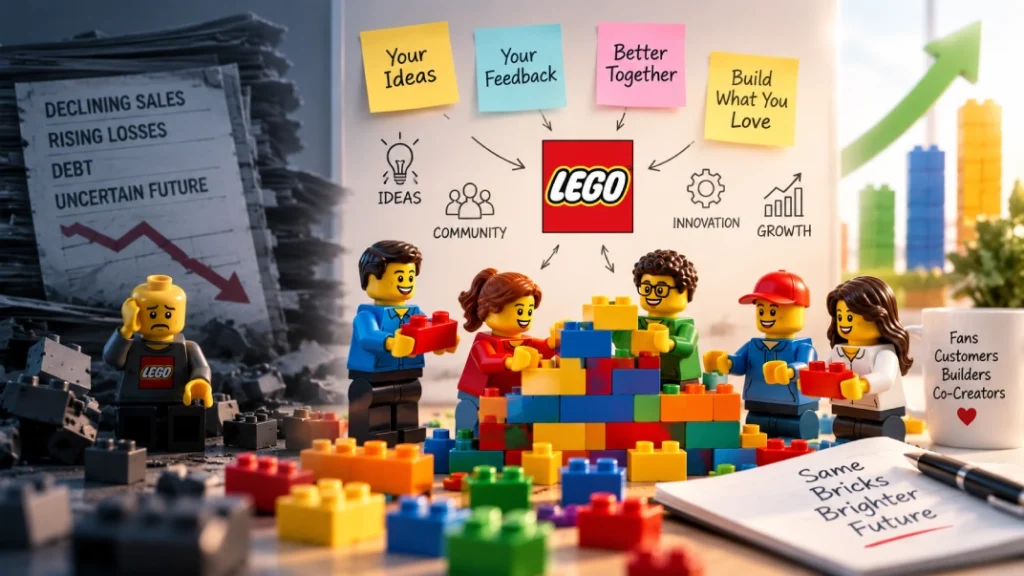
In 2003, LEGO was on the brink of collapse. Burdened by over $\$800$ million in debt and suffering from unfocused diversification, the iconic Danish toymaker realized that traditional top-down product design was failing. The solution wasn’t an expensive consulting firm; it was already sitting in their customer base.
Tapping into the Passion of “AFOLs”
For years, toymakers treated children as their sole demographic. However, LEGO discovered a vocal, hyper-engaged stakeholder segment: Adult Fans of LEGO (AFOLs). Rather than ignoring adult hobbyists who were reverse-engineering sets, LEGO invited them directly into the innovation pipeline.
In 2008, the company pioneered LEGO Ideas, a collaborative crowdsourcing platform. The concept was straightforward: fans submit their own original builds. If a concept garners 10,000 votes from the community, LEGO’s review board considers it for mass production. Upon release, the creator earns a 1% royalty share on net sales.
The Strategic Payoff
Listening directly to these passionate stakeholders paid enormous dividends:
- De-Risked Product Development: LEGO launched verified commercial hits—including the NASA Apollo Saturn V and the Central Perk Friends set—with guaranteed market demand already established.
- Rapid Market Expansion: The initiative converted adult hobbyists from fringe enthusiasts into brand ambassadors, driving record revenues.
- Agile Innovation: LEGO lowered internal R&D cycles while fostering deep customer loyalty.
Key Takeaway for Business Leaders
Your most dedicated customers are often your best product strategists. When you create formal channels for stakeholder dialogue, you don’t just gather feedback—you co-create value that competitors cannot duplicate.
Is your organization actively listening to its super-users, or are you keeping the boardroom door shut?