In global retail, supply chains are notoriously opaque. While corporate brands manage vendor contracts from head offices, the front-line workers assembling the goods remain virtually invisible. Traditional periodic factory audits often fail to capture authentic workplace dynamics, masking operational inefficiencies and safety risks.
Recognizing this blind spot, British retail leader Marks & Spencer (M&S) decided to elevate factory workers from overlooked laborers to essential operational stakeholders.
Direct, Anonymous Stakeholder Listening
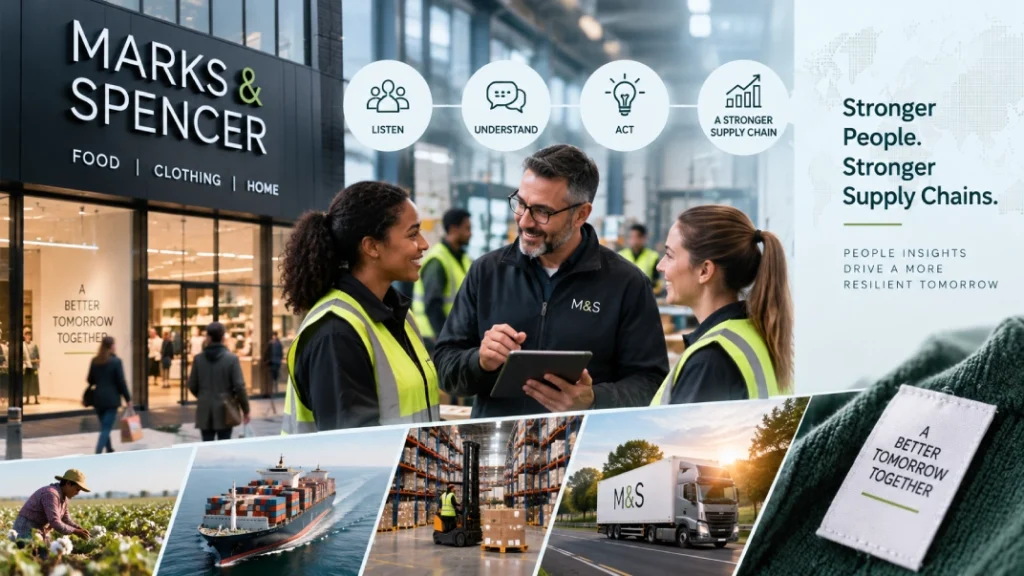
Under its ethical sourcing and sustainability commitments, M&S deployed mobile-enabled worker-voice technology across supplier networks in countries including Bangladesh, India, and Sri Lanka.
By leveraging anonymous surveys accessible via basic mobile phones, more than 60,000 factory employees gained a secure conduit to share feedback on safety standards, supervisor practices, wage transparency, and factory conditions. The insights bypassed middle managers and went straight to procurement leaders.
Operational and Ethical Results
By listening to ground-level stakeholders, M&S achieved concrete business advantages:
- Reduced Churn and Downtime: Addressing direct worker feedback decreased labor turnover and mitigated wildcat strikes, keeping supplier schedules predictable.
- Rapid Risk Mitigation: Hazardous conditions were identified and remediated long before they could escalate into catastrophic factory accidents.
- Brand Integrity: Demonstrable supply chain accountability solidified M&S’s standing as a benchmark leader in corporate ESG ratings.
The Strategic Takeaway
Front-line workers are often the first to spot operational vulnerabilities and safety hazards. Companies that build direct, psychologically safe communication lines with their suppliers’ workforces protect both their human capital and their bottom line.
Does your operational audit process rely on surface-level checklists, or are you genuinely hearing the voices on your production floor?